

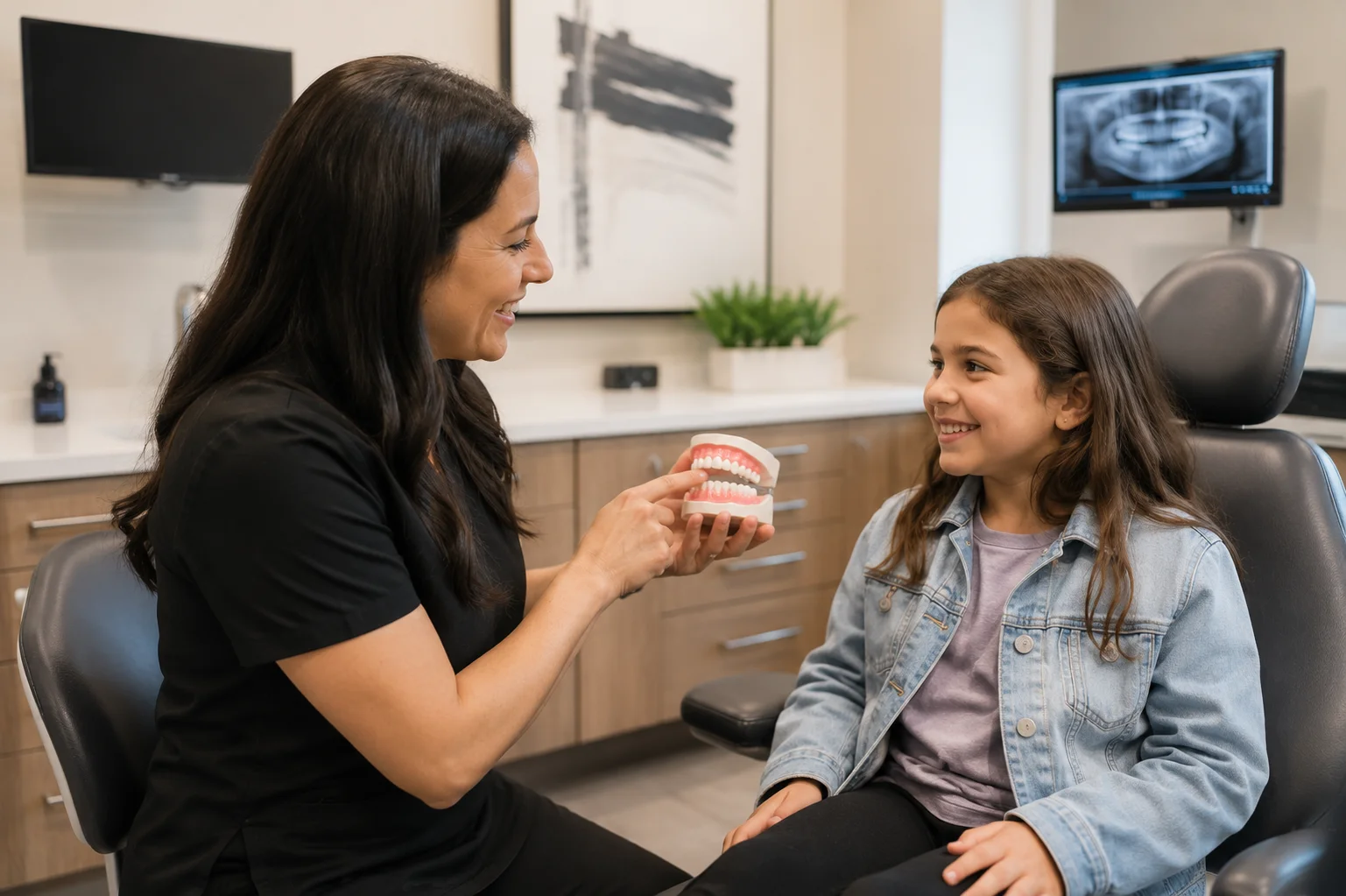
Phase 1 orthodontics is an early, targeted course of treatment that addresses jaw and bite problems in children while their bones are still growing and most responsive to correction. At Dynamic Family Dentistry in Clifton, Texas, Dr. Scott Kennedy, DDS, a Roseman University graduate and Academy of General Dentistry member who completed his residency at Waco Family Health Clinic, helps Bosque County families understand when Phase 1 treatment makes sense, what it involves, and what to expect when it is done. This article covers the purpose, procedures, and outcomes of Phase 1 so parents can make confident decisions for their child.
Most parents have never heard the term Phase 1 orthodontics until a dentist brings it up, and when it happens it can feel confusing or even alarming. The good news is that Phase 1 is not a sign something is seriously wrong. It means a developing problem has been caught early enough that a shorter, simpler intervention now can prevent a longer, more complex one later. For children in College Hill, Bosque Addition, and nearby Valley Mills, understanding what Phase 1 does and who needs it is the first step toward making the right call for your child’s smile.
What Phase 1 Orthodontics Is and Why It Exists
Phase 1, also called interceptive orthodontic treatment, is the first stage of a two-phase treatment plan. It typically begins between ages 6 and 10, while a child still has a mix of baby and permanent teeth. The purpose is not to finish straightening the teeth. The purpose is to address structural jaw or bite problems that will become harder to fix once the growth phase ends and bone matures.
The American Association of Orthodontists recommends a first orthodontic evaluation no later than age 7, specifically because this is when Phase 1 issues become visible before they set in. Dr. Kennedy uses this window to look at how the jaw is developing, whether the upper and lower arches are proportioned correctly, and whether there are bite patterns forming that will cause problems as the permanent teeth come in. Phase 1 treatment is recommended only when an early intervention produces a meaningfully better outcome than waiting.
Not every child needs Phase 1. The majority of orthodontic patients complete a single phase of comprehensive treatment in the teen years and do just fine. Phase 1 is reserved for children with specific structural concerns that respond to growth-phase intervention in ways that comprehensive braces later simply cannot replicate.
What Problems Phase 1 Treatment Addresses
Phase 1 targets jaw and bite problems that are best corrected during active growth. Dr. Kennedy at Dynamic Family Dentistry evaluates each child individually and only recommends Phase 1 when the clinical picture clearly supports it. Families in Spring Creek, Riverside, and Sunset Park can expect a straightforward explanation of exactly what the evaluation found and why early treatment is being recommended.
Here are the conditions Phase 1 treatment is most commonly used to address:
- Narrow upper jaw that will cause crowding as permanent teeth come in
- Crossbite where upper teeth sit inside the lower teeth when biting
- Underbite where the lower jaw protrudes in front of the upper jaw
- Severe overbite where the upper front teeth significantly overlap the lower
- Protruding front teeth at elevated risk of trauma from falls or impact
- Early or late baby tooth loss that has shifted neighboring teeth out of position
- Harmful oral habits like thumb sucking that are actively reshaping the jaw
- Significant crowding that requires space creation before permanent teeth arrive
Dr. Kennedy discusses every finding with the parent before any treatment is recommended. If the issue falls into a category where waiting produces the same outcome, he will say so and schedule a monitoring appointment instead.
What Phase 1 Treatment Actually Involves
Phase 1 treatment at Dynamic Family Dentistry is almost always simpler than parents expect. It rarely looks like a full set of braces. Most Phase 1 interventions use a single targeted appliance for a defined period of time, followed by a resting phase while the permanent teeth continue coming in.
The most common Phase 1 appliances used to address developing jaw and bite problems are:
- Palatal expanders to widen the upper arch while the midpalatal suture is still open
- Partial braces on selected teeth to correct specific positioning issues
- Functional appliances that guide the lower jaw into a better growth pattern
- Space maintainers to hold room after early baby tooth loss
- Habit appliances that stop thumb sucking and allow the affected jaw structure to rebound
- Retainers worn at night to hold corrections made during active Phase 1 treatment
The length of Phase 1 varies based on what is being treated, but most active Phase 1 treatment runs between 9 and 18 months. After Phase 1 ends, children enter a resting period where no appliance is worn and Dr. Kennedy monitors development at periodic check-ins. Phase 2, if needed, begins once most permanent teeth have come in.
How Phase 1 and Phase 2 Compare
One of the most common questions families in Lakewood, Pecan Grove, and the Cranfills Gap community ask is whether Phase 1 means their child will definitely need Phase 2. The honest answer is that many children who complete Phase 1 still go on to Phase 2 comprehensive treatment, but Phase 2 is shorter and simpler because the harder structural work was already handled.
| Factor | Phase 1 (Ages 6-10) | Phase 2 (Ages 11-14) |
| Teeth present | Mix of baby and permanent | Most or all permanent teeth |
| Goal | Guide jaw growth and correct structural problems | Position all teeth for best function and appearance |
| Typical appliances | Expanders, partial braces, functional appliances | Full braces or clear aligners |
| Duration | 9 to 18 months active treatment | 12 to 24 months |
| Resting period after | Yes, monitoring continues until Phase 2 begins | No, treatment is comprehensive |
Phase 2 after a successful Phase 1 is typically more predictable and often shorter than it would have been without the early groundwork. For children who had a crossbite corrected or an arch expanded in Phase 1, Phase 2 focuses purely on final alignment rather than having to address structural issues that should have been handled years earlier.
What to Expect During and After Phase 1
Starting Phase 1 treatment at Dynamic Family Dentistry begins with a conversation, not a treatment chair. Dr. Kennedy walks the parent through what the evaluation found, which appliance is recommended and why, what the treatment timeline looks like, and what the resting period involves before Phase 2. Families in Oakwood, Country Club Estates, and nearby Meridian consistently say the consultation feels thorough and unhurried.
Once treatment begins, children adapt to most Phase 1 appliances within the first week or two. Dr. Kennedy schedules regular check-ins throughout active treatment to monitor progress and make any adjustments needed. After Phase 1 ends, the resting period is not a gap in care. It is a planned, monitored phase where Dr. Kennedy watches how the remaining permanent teeth are erupting and uses that information to plan Phase 2 timing.
Your Child’s Smile Is Worth Getting Right the First Time
Every parent wants to know they made the right call for their child’s health, and when it comes to orthodontic development, acting at the right time is what separates a smooth process from a complicated one. You do not have to figure out whether Phase 1 is right for your child on your own. Dr. Scott Kennedy at Dynamic Family Dentistry is here to guide your family through that decision with honest answers, a clear explanation of what the exam found, and a treatment plan that fits your child’s specific development. His training at Roseman University, residency at Waco Family Health Clinic, and membership in the American Dental Association and Academy of General Dentistry mean your child is evaluated by someone who understands both the clinical evidence and the real-world impact of getting orthodontic timing right.
If your child is between ages 6 and 10, has been told they may need early orthodontic treatment, or has never had a first evaluation, call Dynamic Family Dentistry at (254) 675-3518 or schedule online at bosquecountydentist.com/contact-form and get the answers your family needs to move forward with confidence.
Dynamic Family Dentistry
302 S. Avenue Q, Clifton, Texas
Phone: (254) 675-3518
Frequently Asked Questions
What is the difference between Phase 1 and Phase 2 orthodontic treatment?
Phase 1 is early interceptive treatment that begins while a child still has a mix of baby and permanent teeth, typically between ages 6 and 10. Its goal is to address specific jaw and bite problems that respond best to correction during active growth. Phase 2 is comprehensive treatment, usually with full braces or aligners, that begins once most permanent teeth are in and focuses on final alignment and bite refinement. Not every child needs Phase 1, but for those who do, it makes Phase 2 shorter, more predictable, and more straightforward. The American Association of Orthodontists explains the structure and goals of two-phase treatment.
Does my child definitely need Phase 2 after completing Phase 1?
Not necessarily. Some children complete Phase 1 and require only a retainer or monitoring through Phase 2, with no additional active treatment needed. Most children, however, do go on to some form of Phase 2 treatment once all permanent teeth are in, though it is typically shorter and less involved than it would have been without Phase 1. Dr. Kennedy discusses likely Phase 2 needs as part of the Phase 1 planning conversation so families are not surprised later. The AAO covers what parents should expect from early orthodontic treatment and its relationship to later care.
How long does Phase 1 orthodontic treatment take?
Active Phase 1 treatment typically runs between 9 and 18 months depending on the problem being addressed and the appliance being used. After active treatment ends, children enter a resting period where no appliance is worn but Dr. Kennedy continues monitoring at periodic check-ins as the permanent teeth come in. The resting period can last one to two years before Phase 2 begins. Parents in Clifton and Bosque County can expect a clear timeline estimate at the Phase 1 consultation so they understand the full picture from the start. The AAO outlines the components and goals of child orthodontic care.
Can early Phase 1 treatment save money compared to waiting?
In many cases, yes. Treating structural jaw problems during the growth phase typically means using simpler appliances for a shorter period of time, which costs less than addressing the same problems after jaw growth is complete when surgical intervention or more complex treatment may be the only option. A narrow palate corrected with a palatal expander at age 8 costs far less overall than the same problem addressed with jaw surgery at 20. Families who act during the Phase 1 window also tend to have shorter, less involved Phase 2 treatment, which reduces the total cost across both phases. The American Association of Orthodontists explains how early care supports more cost-effective outcomes.
Related Services

