

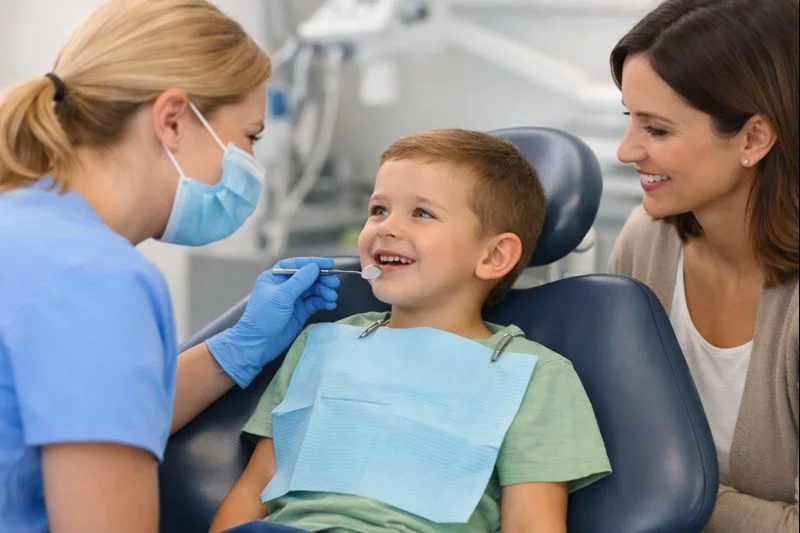
Early orthodontic treatment in children produces better outcomes, shorter treatment times, and fewer complications when it starts during the growth years. At Dynamic Family Dentistry in Clifton, Texas, Dr. Scott Kennedy, DDS, a Roseman University graduate and Academy of General Dentistry member who completed his residency at Waco Family Health Clinic, helps Bosque County families understand how to use the developmental window before it closes. Acting early is not about rushing your child into braces. It is about giving the right guidance while the jaw is still flexible enough to respond.
Most parents picture orthodontic treatment as something that happens in middle school after all the adult teeth have come in. By that point, some of the most impactful corrections are no longer possible without surgery or more complex intervention. A child in College Hill or Bosque Addition whose narrow palate or underbite goes unaddressed during childhood will face a harder road at 15 than the one Dr. Kennedy at Dynamic Family Dentistry could have created at 8 with a simple appliance and a well-timed plan.
Why Jaw Growth Is the Key to Simpler Treatment
Between ages 6 and 12, a child’s jaw bones are still soft, responsive, and actively growing. This is the phase where an orthodontist can guide development rather than correct a problem that has already hardened into place. Dr. Kennedy uses this window to intercept issues before they become structural, which means the child gets where they need to go with less intervention than waiting would have required.
The American Association of Orthodontists recommends a first orthodontic evaluation no later than age 7 for exactly this reason. At this age, children have enough permanent teeth for a trained eye to see how the jaw is tracking and whether anything needs to be addressed. A child in Spring Creek or Riverside who comes in at 7 and receives a palatal expander for a crossbite will almost always have a simpler, shorter overall treatment experience than one who waits until the crossbite is locked in by mature bone.
Problems that start small tend to compound. A narrow arch creates crowding. Crowding shifts teeth into positions that affect the bite. A bite that is off puts stress on the jaw joint and can affect chewing, breathing, and even sleep. Catching the first link in that chain is what early orthodontic care at Dynamic Family Dentistry is designed to do.
Long-Term Benefits That Follow Your Child Into Adulthood
The benefits of early orthodontic treatment are not limited to the treatment years. Families across Clifton Downtown, Lakewood, and the nearby community of Meridian see the long-term results when children who had early intervention move through their teen years with healthier bites, cleaner teeth, and more confidence than they would have had otherwise. Dr. Kennedy sees this play out regularly and it is one of the strongest reasons he recommends early evaluation for every child.
Here is what early orthodontic treatment can achieve for your child:
- Guide jaw growth into a healthier pattern while bones are still soft and responsive
- Create natural space for permanent teeth without needing extractions
- Correct crossbites, underbites, and overbites before they set into mature bone
- Reduce the risk of trauma to front teeth that protrude beyond a safe position
- Break habits like thumb sucking that reshape the jaw over time
- Improve speech that is affected by bite misalignment
- Support better nasal breathing by widening narrow arches early
- Reduce the length and complexity of any second phase of treatment needed later
Dr. Kennedy evaluates every child individually before recommending any treatment. Some children need early intervention. Others need only monitoring. The evaluation tells you which category your child is in so you can plan with accurate information rather than assumptions.
How Early Treatment Compares to Waiting
Parents from Valley Mills and North Clifton often ask whether it is better to handle everything at once in the teen years rather than doing two phases of treatment. For some issues that approach works well. For others, waiting means the most effective window has already closed.
| Concern | Early Treatment (Ages 7-10) | Waiting Until Teen Years |
| Narrow upper jaw | Palatal expander while suture is open | Suture closes, surgery may be required |
| Underbite | Growth modification during active growth | May require orthognathic surgery as adult |
| Crowding | Space created naturally with expansion | Tooth extraction more likely to be needed |
| Protruding front teeth | Appliance reduces trauma risk early | Trauma risk continues through childhood |
| Thumb sucking effects | Habit appliance corrects jaw impact | Structural changes may already be fixed |
The clearest cases for early treatment are narrow palates and underbites. Both involve bone structure that changes with growth, and both become substantially harder to correct once that growth is complete. For families in Pecan Grove, White Addition, and the Cranfills Gap community, a conversation with Dr. Kennedy before the growth window closes is the single most useful step they can take.
What Early Orthodontic Treatment Actually Looks Like
When parents hear “early treatment,” they often picture a full set of metal braces on a seven-year-old. That is rarely the case. Interceptive orthodontics is about using targeted, minimal appliances at the right developmental moment to prevent a larger problem from forming. Most early treatment at Dynamic Family Dentistry is far simpler than families expect, and Dr. Kennedy walks every family through exactly what is involved before anything begins.
The most common approaches Dr. Kennedy uses for early orthodontic treatment include:
- Palatal expanders to widen the upper jaw and create room for incoming permanent teeth
- Partial braces on specific teeth during the mixed dentition phase
- Growth modification appliances to guide jaw position for underbites and overbites
- Space maintainers to hold room after early baby tooth loss
- Habit appliances to help children stop thumb sucking and correct its jaw effects
- Monitoring and observation when the issue does not yet need a physical appliance
No treatment begins without a clear, plain-language conversation with the family. Dr. Kennedy explains what he found, why he is recommending what he is recommending, and what the treatment involves from start to finish. Parents in Sunset Park and Country Club Estates consistently say that the straightforward communication is what makes them comfortable moving forward.
What Happens If Early Treatment Is Skipped
Some children genuinely do not need early treatment, and Dr. Kennedy will tell you clearly when that is the case. But for those who do have developing problems, skipping the early window has real consequences. A crossbite that a palatal expander could resolve in six months at age 9 may require surgical intervention at 19, when the midpalatal suture has fully fused. An underbite caught during active growth and guided into alignment with a functional appliance may become a jaw surgery case if left until adulthood when skeletal growth is complete.
The confidence dimension matters just as much. Children with visible misalignment, particularly protruding front teeth or significant crowding, face a higher risk of teasing and social difficulty during the years when those experiences shape how they see themselves. Families in Oakwood and Laguna Park who address these concerns during childhood give their children more than a better bite. They give them a more comfortable path through adolescence.
Your Child Deserves a Smile That Works for Life
Every parent wants their child to grow up confident, healthy, and free from avoidable problems. When it comes to your child’s bite and jaw development, you are the hero in this story, and you do not have to figure it out alone. Dr. Scott Kennedy at Dynamic Family Dentistry is here to be your guide, with honest answers, a clear plan, and the clinical experience to know exactly when and how to act. His training at Roseman University, his residency at Waco Family Health Clinic, and his membership in the American Dental Association and Academy of General Dentistry mean your child is in skilled, knowledgeable hands from the very first visit.
If your child is approaching age 7, already showing signs of a bite or alignment issue, or has never had an orthodontic evaluation, the right time to schedule is now. Call Dynamic Family Dentistry at (254) 675-3518 or book your appointment at bosquecountydentist.com/contact-form and take the first step toward a smile your child will carry with confidence for life.
Dynamic Family Dentistry
302 S. Avenue Q, Clifton, Texas
Phone: (254) 675-3518
Frequently Asked Questions
What is the main benefit of starting orthodontic treatment early?
The biggest advantage is that jaw bones in younger children are still soft and actively growing, which means an orthodontist can guide development rather than correct a problem that has already hardened into its final position. Early treatment often results in shorter overall treatment time, simpler appliances, fewer extractions, and better long-term stability. Dr. Kennedy at Dynamic Family Dentistry evaluates each child individually and only recommends early intervention when the clinical picture clearly supports it, so families get honest guidance rather than unnecessary treatment. The American Association of Orthodontists explains the goals and benefits of early interceptive care.
Will my child still need braces after early orthodontic treatment?
Sometimes, yes. Early treatment addresses specific structural issues during the growth phase, but a second phase with braces or clear aligners may still be needed once all the permanent teeth have come in. The second phase is typically shorter and less involved because the harder skeletal problems were already handled during the first phase. Many Clifton families find the two-phase approach less disruptive overall than waiting and doing everything at once during the teen years when schedules are busier and the treatment is more complex. The AAO outlines what families can expect from early visits and the reasons to start the conversation young.
How does early orthodontic treatment affect a child’s confidence?
Research consistently shows that children with visible misalignment, particularly protruding teeth or significant crowding, face higher rates of teasing and lower self-esteem during the school years when those experiences matter most. Addressing bite and alignment concerns early reduces that risk and supports a more comfortable social experience through adolescence. Beyond confidence, correcting bite issues early also improves speech clarity, makes teeth easier to clean, and supports better chewing and breathing, all of which affect how a child feels day to day. The American Association of Orthodontists covers the research connecting orthodontic treatment to improved health and confidence outcomes.
How do I know if my child needs early treatment or just monitoring?
That is exactly what a first evaluation at Dynamic Family Dentistry is designed to determine. Dr. Kennedy examines the teeth, jaw, and bite, uses digital X-rays to check below the surface, and walks the parent through what he found before the appointment is over. Three outcomes are possible: no treatment is needed right now, a monitoring plan makes sense to watch development over the next year or two, or early intervention is clearly the right call based on what the exam shows. Many children fall into the monitoring category and never need early treatment at all, which is why the evaluation itself is the most valuable first step. The AAO explains what parents should expect from a child’s first orthodontic visit.
Related Services

