

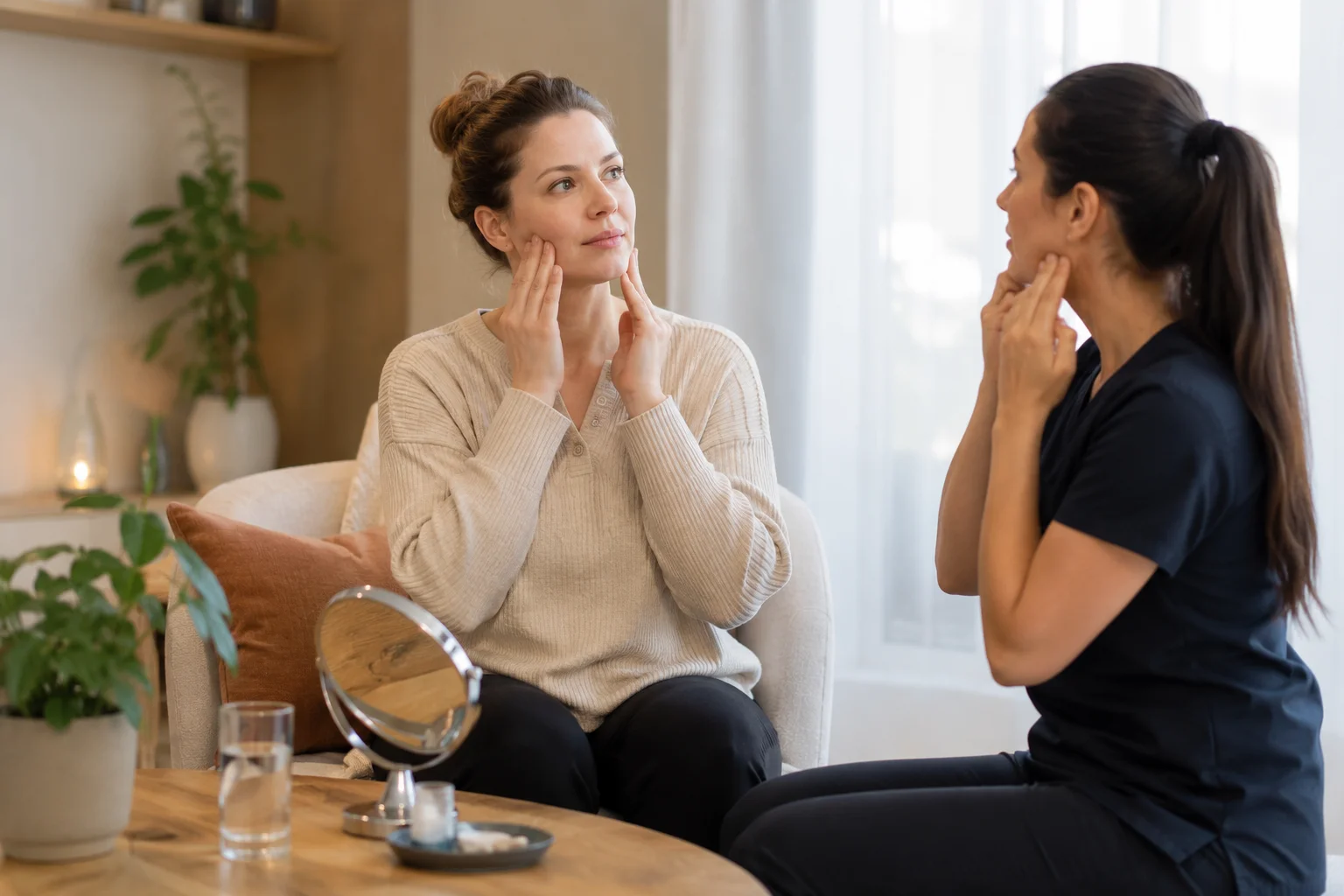
TMJ massage is one of the most effective home remedies for jaw pain. At Dynamic Family Dentistry in Clifton, Texas, Dr. Scott Kennedy, DDS helps Bosque County patients find real relief. He is a Roseman University graduate, AGD member, and completed his residency at Waco Family Health Clinic. This article covers what massage can do, which techniques work, and when to see a dentist.
TMJ disorders affect the joint connecting your jaw to your skull. They also involve the muscles that control chewing and movement. When those muscles tighten or develop trigger points, the results are familiar. Jaw pain, clicking, headaches, and limited mouth opening are the most common symptoms. Patients in College Hill, Lakewood, and nearby Valley Mills deal with this regularly. Most of them have already tried massage at home before calling Dynamic Family Dentistry. Some find real relief. Others need more than a home routine can provide.
What the Research Says About TMJ Massage
The short answer is yes, massage works for TMJ pain. But results depend on what type of TMJ problem you have. Research consistently shows that manual therapy reduces pain and improves jaw movement. This is especially true for myofascial TMJ disorders, which involve muscle tension rather than joint damage. The improvement is real, meaningful, and not just temporary relief.
The key distinction is muscular versus structural TMJ problems. Muscle-based pain responds well to massage because tension is the root cause. When the disc inside the joint is displaced, massage helps symptoms but not the underlying problem. Dr. Kennedy evaluates which category applies before building any home care plan. That distinction changes everything about what treatment looks like.
Mayo Clinic recommends gentle jaw massage as a first-line approach for mild to moderate TMJ symptoms. Patients in Spring Creek, Riverside, and Bosque Addition dealing with morning soreness are often good candidates. A consistent daily routine almost always outperforms occasional aggressive pressure sessions.
Techniques That Provide the Most Relief
Not all TMJ massage techniques work equally well. Applying pressure in the wrong place can increase soreness. The most effective approaches target the masseter along the cheek and the temporalis along the temple. Both are primary contributors to TMJ-related muscle pain. Dr. Kennedy walks patients through the right technique before they try these at home.
- Masseter release: circular finger pressure along the jaw muscle from cheekbone to jawline
- Temporalis massage: slow fingertip circles along the temple and above the ear
- Suboccipital release: gentle upward pressure at the base of the skull
- Intraoral massage: gloved finger pressure inside the cheek on the deep masseter
- Warm compress first: five minutes of heat before massage loosens the muscle tissue
- Trigger point hold: steady pressure on a tender knot for 30 to 90 seconds until it releases
Consistency matters more than intensity with every one of these techniques. Patients in Pecan Grove and Cranfills Gap who build a twice-daily five-minute routine see far better results. Heavy pressure applied once a week rarely produces lasting change.
When Massage Helps and When It Is Not Enough
Massage works best as one part of a broader TMJ management plan. It is not a standalone cure for every type of jaw problem. Dr. Kennedy is direct with every patient who asks about home care options. Massage is a valuable tool for the right presentation. It is not the right tool when structural problems inside the joint are driving the symptoms.
| Situation | Is Massage Helpful? | What Else Is Needed? |
| Muscle tension and jaw soreness | Yes, highly effective | Consistent home routine |
| Morning pain from nighttime clenching | Partially helpful | Night guard from Dr. Kennedy |
| Clicking with no pain | Mild benefit | Dental monitoring |
| Disc displacement or locked jaw | Symptom relief only | Professional dental treatment |
| Chronic headaches linked to jaw | Helpful for muscle component | Full TMJ evaluation |
| Post-dental procedure soreness | Yes, effective | Rest and soft foods |
The pattern above is clear. Muscle-based symptoms respond well to massage. Structural problems inside the joint require professional care that massage alone cannot provide. Patients in Oakwood and White Addition seeing no improvement after months are likely dealing with something structural. A dental visit is the right move at that point.
Signs You Should Book a Dental Visit Instead
Some TMJ symptoms go well beyond what home massage can address. Dr. Kennedy sees this pattern regularly in Bosque County patients who describe trying every home remedy before coming in. Patients from North Clifton, Sunset Park, and Meridian often wait too long before booking a visit. An early evaluation almost always leads to a simpler treatment path.
- Jaw pain lasting more than three weeks without consistent improvement
- Morning soreness or headaches occurring daily or most mornings
- A jaw that catches, locks, or shifts noticeably when opening
- Changes in how your teeth fit together when biting down
- Pain severe enough to affect eating, speaking, or sleep
- Clicking or popping that has become louder or more frequent over time
Dr. Kennedy evaluates every patient individually at Dynamic Family Dentistry. He explains what the findings mean in plain language before recommending anything. No treatment plan starts without a clear conversation first.
Get Real TMJ Relief in Clifton TX
Living with daily jaw pain and a jaw that clicks is exhausting. You deserve a clear answer about what is actually causing it. Dr. Scott Kennedy at Dynamic Family Dentistry is here to guide you with honest answers and clinical experience. His Roseman University training and ADA and AGD membership keep his care grounded in current standards.
If massage is not helping or pain has persisted for weeks, now is the time to act. Call Dynamic Family Dentistry at (254) 675-3518 or book online at bosquecountydentist.com/contact-form and get the answers you need.
Frequently Asked Questions
Does massaging the jaw actually reduce TMJ pain?
Yes, for muscle-based TMJ disorders, massage therapy has solid research support. It reduces pain and improves jaw range of motion over time. The masseter and temporalis muscles are the most common pain sources. Consistent gentle pressure reduces trigger point activity and muscle tension effectively. Patients with structural disc or joint issues see less benefit from massage alone. Mayo Clinic recommends gentle self-massage as part of conservative TMJ self-care.
How often should I massage my jaw for TMJ relief?
Five to ten minutes twice daily produces better results than longer occasional sessions. Jaw muscles respond to regularity, not to intensity. The goal is reducing baseline tension over days and weeks. A warm compress before massaging helps the tissue respond better to pressure. Most patients notice meaningful improvement within two to three weeks of consistency. If nothing changes after a month of regular effort, book a professional evaluation. WebMD covers the documented benefits of massage for musculoskeletal pain.
Can TMJ massage make things worse?
It can if done incorrectly. Too much pressure or massaging over an inflamed joint increases soreness. The goal is gentle, sustained pressure that encourages muscle release. Forcing through resistance is the wrong approach. If massage consistently increases pain after the first two days, stop and get evaluated. Dr. Kennedy assesses whether technique, location, or the underlying condition is the issue. Mayo Clinic covers TMJ symptoms and when professional care is needed.
When should I see a dentist instead of managing TMJ at home?
See a dentist if jaw pain has lasted more than a few weeks without improvement. Daily morning soreness or headaches are a clear signal worth acting on. A jaw that catches, clicks loudly, or shifts when opening warrants clinical evaluation. Changes in bite should never be ignored. Pain affecting eating or sleep is always worth a professional look. Dr. Kennedy performs a full TMJ assessment and identifies the right path forward for each patient. WebMD covers TMJ treatment approaches and when professional care is needed.

