

If your jaw muscles always feel tight or achy, you may have wondered whether massage therapy could finally loosen things up. A lot of people with TMJ try massage after dealing with jaw pain, headaches, or neck tension for months. The big question is whether it actually helps or just feels good for an hour.
Massage and manual therapy can help certain types of TMJ problems, especially muscle-driven ones. It is not a cure and it is not right for everyone, but for the right patient it can be a useful part of a conservative TMJ plan. Understanding when massage helps, and how it should be used, makes all the difference.
Can Massage Really Help TMJ Pain?
For muscle-driven TMJ pain, massage is one of the conservative treatments that actually has research behind it. Studies show that targeted manual therapy can reduce pain and improve how wide the jaw opens in many people. The biggest improvements tend to happen when massage is combined with specific exercises or relaxation techniques.
Massage works by reducing muscle tension, calming trigger points, and improving blood flow to irritated tissues. When jaw muscles stay tight for long periods, pain can linger even when the joint itself is healthy. Releasing that tension can make everyday activities like chewing and talking more comfortable.
It is important to keep expectations realistic. Massage works best as part of a broader plan that also addresses habits, posture, and jaw mechanics. On its own, it rarely fixes complex TMJ problems.
Who Is a Good Candidate for TMJ Massage?
Massage tends to work best when tight muscles, not damaged joints, are the main issue. People with jaw fatigue, muscle tenderness, tension headaches, or clenching often respond well. These symptoms are common in myofascial, or muscle-dominant, TMJ disorders.
Massage may not be appropriate when joint inflammation, arthritis, recent surgery, or significant disc problems are present. In those cases, hands-on work may need to be delayed or modified. That is why a dental or medical evaluation should come first if symptoms are severe or worsening.
A quick way to think about it is whether your pain feels muscular or mechanical. Achy, tight, or sore muscles often respond well to manual therapy. Sharp joint pain, locking, or sudden loss of opening usually needs a different approach.
TMJ Massage Techniques That Tend to Work
Not all jaw massage is the same, and results depend on how the work is done. Research-aligned TMJ massage focuses on specific muscles and movement patterns rather than general relaxation.
Common techniques used in TMJ-focused massage include:
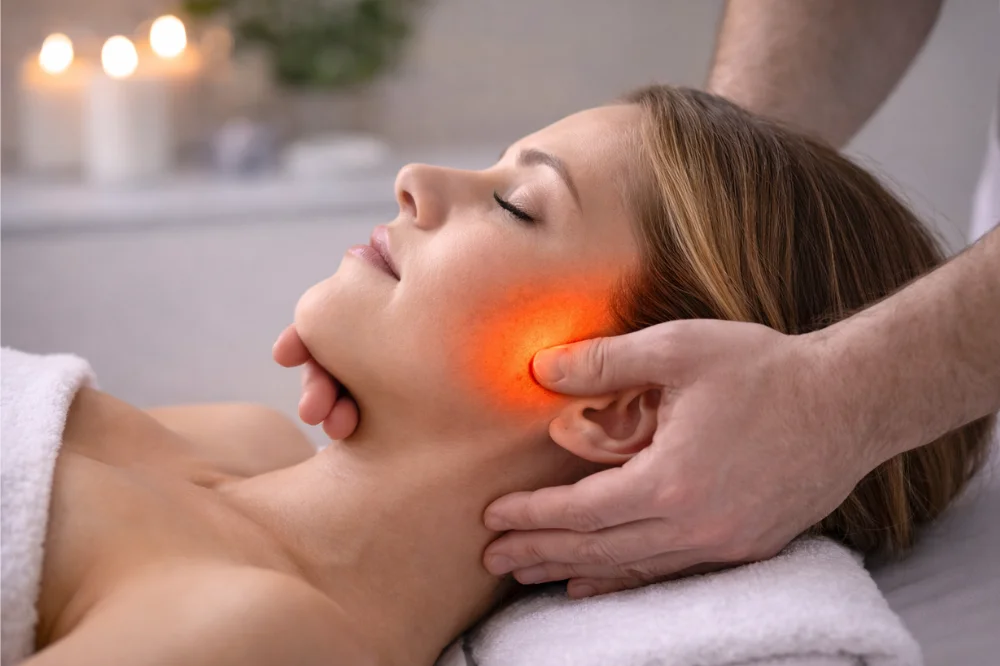
- Extraoral myofascial release, targeting the masseter, temporalis, neck, and shoulder muscles that influence jaw tension
- Intraoral massage, performed with gloves to reach deeper jaw muscles like the pterygoids when appropriate
- Trigger-point therapy, using sustained pressure to calm tight muscle knots that refer pain to the jaw or head
- Manual therapy with gentle mobilization, often combined with neck work to improve overall jaw function
Massage is usually more effective when paired with simple jaw exercises or relaxation techniques. That combination helps the muscles stay relaxed between sessions. Without follow-up exercises, tightness often returns.
How Massage Fits Into an Evidence-Based TMJ Plan
Massage is best viewed as one piece of the TMJ puzzle, not the entire picture. Conservative TMJ care usually includes self-care habits, exercises, stress management, and sometimes a dental appliance. Massage supports these steps by making it easier for muscles to respond.
Dentists and physical therapists often recommend massage alongside jaw stretching or postural work. When muscles relax, it becomes easier to retrain movement patterns that contribute to pain. This is why massage is often included in multidisciplinary TMJ care.
If massage reduces muscle pain but joint symptoms continue, further dental or medical evaluation is still important. Ongoing clicking, locking, or limited opening can signal joint issues that massage alone cannot address. Massage should support proper diagnosis and reassessment, not replace them.
How Massage Compares to Other TMJ Treatments
Before committing to massage therapy, it helps to see where it fits compared to other options. Different treatments target different parts of the TMJ problem. Understanding this prevents unrealistic expectations.
| TMJ Situation | How Massage Helps | When It May Not Be Enough |
| Muscle-dominant TMJ pain | Reduces tension and improves comfort | If joint damage is present |
| Jaw tightness and fatigue | Improves mobility and relaxation | If locking or instability occurs |
| Tension headaches | Often decreases frequency and intensity | If headaches are neurological |
| Joint arthritis or disc issues | Limited benefit | Needs dental or specialist care |
This comparison shows why massage works best for muscle-related TMJ problems. It also highlights when other treatments are more appropriate. Choosing the right tool keeps care effective and safe.
What to Expect During TMJ Massage Therapy
A good TMJ massage session is focused and intentional, not a generic neck or relaxation massage. The therapist usually begins by asking about your symptoms, how your jaw moves, and where you feel tension or pain. That information helps them decide which muscles to work on and how to approach the session safely.
Sessions often focus on the jaw muscles, neck, shoulders, and sometimes the upper back because all of these areas influence jaw function. Intraoral work may be included if the therapist is properly trained and you are comfortable with it. Any technique used should be explained ahead of time, and your consent and comfort should always guide the session.
Mild soreness after a session is common, especially during the first few visits. Most people notice gradual improvement over several sessions rather than immediate or dramatic relief. With TMJ massage, consistency and proper technique matter far more than pressure or intensity.
Finding TMJ-Savvy Massage Providers Near Clifton, TX
Clifton may not have a massage clinic dedicated exclusively to TMJ, but nearby areas often do. Many therapists with TMJ experience work in medical massage clinics or physical therapy settings rather than traditional spas. Local dentists and physical therapists are often the best starting point for finding providers who understand jaw-related pain.
When looking for a TMJ-focused massage provider, it helps to ask a few specific questions:
- TMJ-specific training, including experience working with jaw, neck, and facial muscles
- Comfort with intraoral techniques, when appropriate, along with proper hygiene and consent practices
- Willingness to coordinate care, especially with your dentist or physical therapist
Choosing a provider based on experience rather than spa branding usually leads to better results. TMJ massage works best when it is part of a coordinated care plan rather than a stand-alone service. Clear communication between your massage provider and dental or physical therapy team helps keep treatment safe and effective.
The Takeaway for Clifton Patients
Massage therapy can help TMJ pain when muscles are the main driver of symptoms. It is most effective when combined with exercises, self-care, and dental guidance. It is not a standalone cure, but it can make other treatments work better.
If you are considering TMJ massage, start with a proper evaluation. A dentist or medical provider can help determine whether massage is appropriate and how to integrate it safely. The right combination of care often brings the best relief.
Frequently Asked Questions
Does massage therapy actually treat TMJ, or does it just feel good temporarily?
Many people ask this because they are tired of short-lived relief and want to know if massage is doing anything meaningful. A better question to ask is whether massage is addressing the type of TMJ problem you actually have. Massage therapy can reduce pain and improve jaw movement when TMJ symptoms are driven by muscle tension and trigger points. It works by calming overactive muscles, improving circulation, and reducing guarding. It is most effective when combined with exercises, self-care, and dentist-guided treatment rather than used on its own.
How do I know if my TMJ pain is muscle-related and appropriate for massage?
This question matters because massage helps muscle-based TMJ but may be ineffective or inappropriate for joint damage. What people should really ask is whether their symptoms point to muscle tension or joint pathology. Muscle-driven TMJ often feels achy, tight, or fatigued and may worsen with stress or clenching. Joint-based problems are more likely to involve sharp pain, locking, grinding noises, or sudden loss of opening. A dentist or medical provider can help confirm which pattern you have before massage is started.
Is intraoral TMJ massage safe, and do I actually need it?
People worry about safety and discomfort, which is completely reasonable. A more useful question is whether intraoral work is necessary for your specific muscle pattern. Intraoral massage can safely release deep jaw muscles when performed by a trained provider using proper hygiene and clear consent. It is not required for every TMJ patient and should be avoided or modified if joint inflammation, recent surgery, or structural problems are present. Your dentist or therapist can help decide if it adds value in your case.
Can massage replace a night guard, exercises, or other TMJ treatments?
This matters because many patients hope massage will be a single solution. A better question is how massage fits into a complete TMJ care plan. Massage can make exercises, posture work, and habit changes more effective by reducing muscle resistance. It does not replace oral appliances, exercises, or dental evaluation when those are needed. TMJ care works best when massage supports, rather than replaces, other conservative treatments.
Should I see a dentist before starting TMJ massage therapy?
This question is important because some TMJ conditions require medical oversight before hands-on work. What you should really ask is whether there are red flags that need to be ruled out first. Seeing a dentist helps identify joint damage, arthritis, locking, or other conditions where massage alone is not appropriate. When muscle-based TMJ is confirmed, massage can then be added safely as part of a coordinated plan.

