

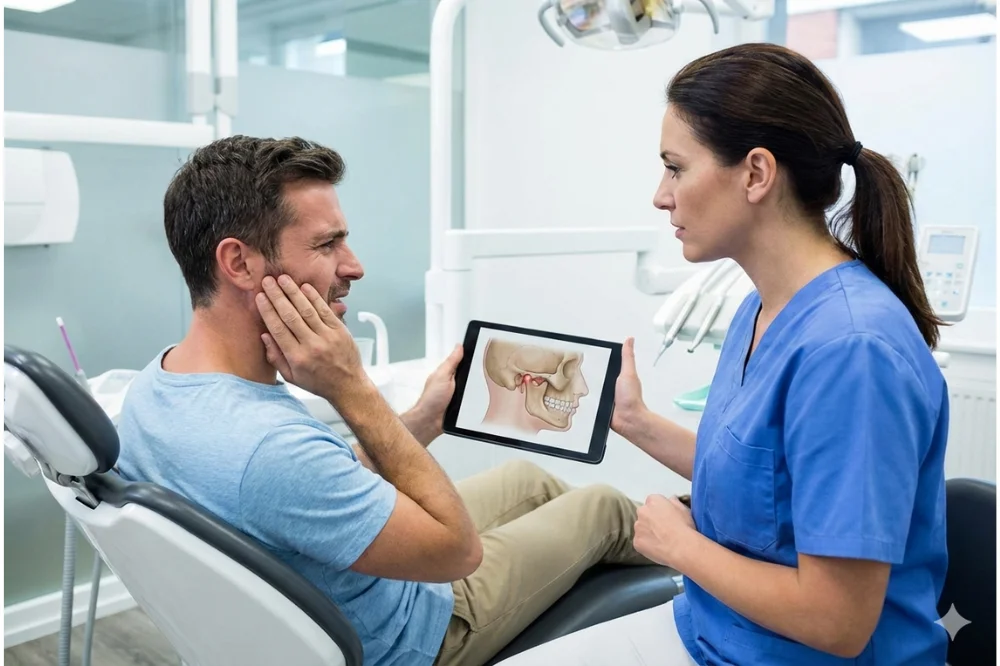
If your jaw pops, clicks, or aches, it is natural to wonder where to start. Some people assume TMJ always requires a specialist or surgery. Others are not sure whether a dentist can help at all. That uncertainty alone can delay care and make symptoms feel more stressful than they need to be.
TMJ is not a single condition with a single cure, and dentists who regularly evaluate jaw pain understand this well. Experienced providers know how to tell the difference between muscle-based TMJ, joint-related problems, and mixed patterns that require a more careful approach. The most effective care comes from pairing clinical experience with established treatment principles and understanding how TMJ symptoms change over time.
Short Answer: Yes, Dentists Can Help With TMJ
For many people, a dentist is the right place to begin when TMJ symptoms show up. Dentists are trained to understand how the teeth, bite, jaw joints, and chewing muscles work together. Because of that, they often recognize TMJ problems early, sometimes before symptoms become severe.
A general dentist can examine jaw movement, listen for joint sounds, check muscle tenderness, and evaluate how the teeth come together. Based on that information, they can determine whether symptoms are likely muscle-based, joint-related, or mixed. In many mild to moderate cases, dentist-directed care is enough to reduce pain and improve daily function.
A common mistake is assuming only a surgeon can help with TMJ. Another is waiting until pain becomes severe before seeking care. Starting with a dentist allows problems to be addressed earlier and often more simply.
How a Dentist Diagnoses TMJ Problems
Before TMJ can be treated effectively, the type of problem needs to be identified. TMJ symptoms often overlap, even when the underlying cause is different. That is why diagnosis matters more than jumping straight into treatment.
A TMJ evaluation usually begins with a detailed history. Your dentist may ask about jaw pain, clicking or locking, headaches, neck tension, clenching or grinding, and past injuries. They will also examine jaw range of motion, muscle tenderness, joint sounds, and bite alignment.
Imaging is not always needed, but it may be recommended when joint damage or arthritis is suspected. Good TMJ care avoids treating symptoms blindly. A structured exam helps prevent unnecessary or ineffective treatments.
Conservative TMJ Treatments a Dentist Can Provide
For most TMJ patients, the most helpful treatments are conservative and reversible. These approaches reduce strain on the jaw and allow irritated tissues to calm down. They also carry very little risk, which is why they are used first.
Dentist-directed conservative TMJ care often includes:
- Self-care and education, such as jaw rest, avoiding gum and wide opening, posture awareness, and using heat or ice at home
- Short-term medication support, usually anti-inflammatory medication or muscle relaxants when appropriate and monitored
- Oral appliances, such as custom night guards or stabilization splints to reduce clenching and protect the teeth
These treatments work best when they are combined and followed consistently. Relying on a night guard alone without habit changes is a common issue. Many patients see meaningful improvement within weeks to months at this stage.
What Dentists Usually Don’t and Shouldn’t Do for TMJ
Just as important as what a dentist can do is what they should avoid doing too quickly. Responsible TMJ care is cautious about irreversible treatments. This approach protects patients from unnecessary risk.
Dentists generally avoid aggressive bite changes, full-mouth dental work, or permanent jaw repositioning for TMJ pain alone. These procedures cannot be undone and do not reliably resolve TMJ symptoms for most people. Orthodontics or major bite changes are not standard TMJ treatments for pain.
Ethical TMJ care focuses on calming symptoms first. Dentists who promise guaranteed cures or push irreversible procedures early are often skipping important diagnostic steps. Asking questions and seeking a second opinion is reasonable.
When a Dentist Refers You to a TMJ Specialist
Sometimes conservative dental care is not enough. In those cases, referral is not a failure, it is the next step. Knowing when to refer is part of responsible TMJ management.
Dentists may refer patients to oral and maxillofacial surgeons when imaging shows structural joint damage, advanced arthritis, locking, or trauma. Referrals to pain specialists, neurology, or behavioral health may be appropriate for chronic or widespread pain conditions.
Some dentists also coordinate care with providers who offer injections or Botox when indicated. The dentist often acts as the care coordinator, helping patients move through the system without guessing who to see next.
How Conservative Care Compares to Advanced TMJ Treatments
Before moving into advanced TMJ care, it helps to see how treatment options usually fit together. Many patients feel pressure to escalate care without understanding the typical sequence. Seeing the full picture makes decisions easier and reduces unnecessary anxiety.
| Treatment Type | What It Typically Helps | When It Is Usually Used |
| Self-care and physical therapy | Muscle tension, early pain, limited movement | First step for most patients |
| Oral appliances | Clenching, grinding, muscle overload | Early after proper evaluation |
| Behavioral and stress care | Chronic pain, flare-ups, clenching habits | Alongside other treatments |
| Injections or Botox | Select muscle or joint cases | After conservative care |
| Surgery | Structural joint damage | Rare, last step |
This comparison shows why there is no single fix for TMJ that works for everyone. TMJ care is meant to move forward step by step, starting with the simplest options first. Advancing only when needed helps keep treatment effective, appropriate, and safe.
TMJ Care in and Around Clifton, TX: What to Expect Locally
In Clifton, TMJ care usually starts with a local dentist who includes TMJ evaluation as part of comprehensive dental care. That first visit focuses on understanding your symptoms, how your jaw moves, and whether dental issues could be contributing to the pain. Starting locally often saves time and helps avoid unnecessary referrals before basic questions are answered.
A typical TMJ care pathway in and around Clifton often looks like this:
- Initial TMJ-focused dental exam to assess jaw movement, muscle tenderness, bite, and symptoms
- Conservative care at the dental office, including self-care guidance, habit coaching, and a custom oral appliance if needed
- Referrals to physical therapy for jaw exercises, posture work, and muscle treatment when appropriate
- Specialist referral coordination if symptoms persist or imaging suggests joint damage or more complex problems
Many people assume advanced TMJ care is only available in large cities, but that is not always true. Patients in smaller communities like Clifton can still receive guideline-based care through coordinated referrals. This team-based approach keeps treatment practical, organized, and centered on what actually helps the jaw heal.
When TMJ Surgery Makes Sense
TMJ surgery is rarely the first option for jaw pain. It is reserved for cases with confirmed structural joint damage or mechanical problems that do not improve with conservative care. Most patients never need surgery.
Deciding on surgery requires imaging and evaluation by a specialist experienced in TMJ disorders. Recovery is longer than with conservative care and often includes temporary limits on jaw movement and diet. Because risks are higher, surgery must be clearly justified.
Even when surgery is appropriate, it is usually part of a longer care plan. Many patients still need physical therapy and ongoing jaw management afterward. Surgery chosen for pain alone often leads to poor outcomes.
The Takeaway for Clifton Patients
Yes, a dentist can help with TMJ, and for many people, they should be the first stop. Dentists diagnose TMJ problems, guide conservative care, and coordinate referrals when needed. Most TMJ treatment is about managing symptoms thoughtfully, not rushing into procedures.
If you are dealing with jaw pain, the next step is a focused evaluation. Bring a list of symptoms, note what makes pain better or worse, and ask how care would progress if you do not improve. Clear answers and conservative-first care are signs you are in the right place.
Frequently Asked Questions
Can a general dentist really treat TMJ, or do I need a specialist?
In many cases, a general dentist can diagnose and manage TMJ effectively, especially when symptoms are mild to moderate. Dentists are often the first providers to recognize TMJ problems and can start conservative treatment. Specialists are usually involved only if imaging shows joint damage or symptoms do not improve.
Will a dentist try to change my bite to fix TMJ?
Most dentists avoid permanent bite changes as a first treatment for TMJ. Conservative care focuses on reversible options like self-care, exercises, and oral appliances. Bite changes are considered only in very specific situations.
How long does TMJ treatment usually take?
Many patients notice improvement within a few weeks, but full recovery can take several months. TMJ treatment works best when it is consistent and adjusted over time. Quick fixes are uncommon.
Are night guards enough to cure TMJ?
Night guards can help reduce clenching and protect teeth, but they are rarely a complete solution by themselves. They work best when combined with habit changes, exercises, and stress management. TMJ care is usually a combination of approaches.
When should I consider seeing a TMJ specialist or surgeon?
Referral is usually considered when conservative care has not helped or when imaging shows joint damage, arthritis, or locking. Surgery is reserved for a small number of patients with structural problems. Most people never need surgical treatment.

