

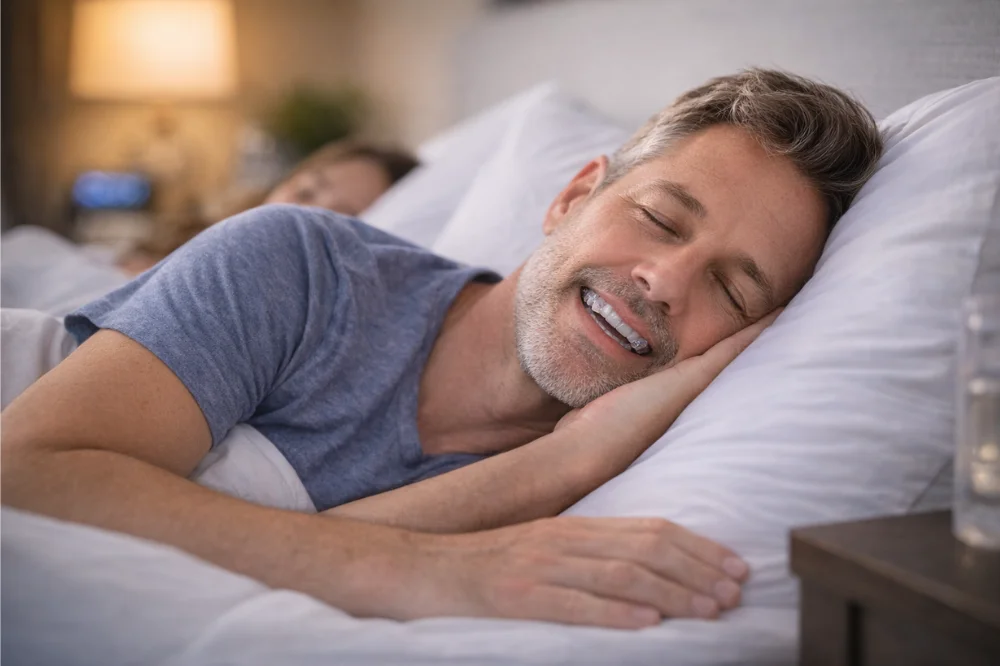
An oral appliance can treat sleep apnea by moving the lower jaw slightly forward during sleep so the airway stays open and breathing interruptions happen less often. CPAP therapy is usually stronger at eliminating apnea events, but many patients still achieve meaningful improvement with an oral appliance, especially when CPAP is difficult to tolerate. For people with mild to moderate obstructive sleep apnea, or those who cannot comfortably use CPAP equipment, a custom dental appliance can become a practical and effective part of long term sleep care.
At Dynamic Family Dentistry in Clifton, Texas, Dr. Scott Kennedy helps patients understand how these treatment options fit into a complete sleep health plan. Dr. Kennedy studied at BYU and earned his dental degree from Roseman University before completing a residency at Waco’s Family Health Clinic. He remains active in the American Dental Association, the Texas Dental Association, and the Academy of General Dentistry, and he regularly collaborates with sleep physicians who diagnose obstructive sleep apnea. This collaborative approach ensures patients receive treatment that protects both their breathing and their long term oral health.
How CPAP and Oral Appliances Treat Sleep Apnea
Both CPAP therapy and oral appliances are designed to prevent the airway from collapsing during sleep. The difference between them lies in the method used to keep the airway open throughout the night. CPAP therapy delivers a steady stream of pressurized air through a mask, which acts like a splint that holds the airway open.
Oral appliances work from inside the mouth by repositioning the lower jaw slightly forward. This movement also shifts the tongue base forward and increases the open space behind the tongue. The additional airway space helps reduce airway collapse so breathing remains more stable throughout the night.
Both treatments target the same underlying problem, which is airway collapse during sleep. CPAP relies on air pressure from outside the body, while oral appliances adjust jaw and tongue position from within the mouth. When each therapy is used consistently and appropriately, both can significantly improve breathing during sleep.
Effectiveness Head to Head AHI Oxygen and Health Outcomes
Research consistently shows that CPAP therapy produces the strongest improvement in apnea numbers. The apnea hypopnea index, often called AHI, measures how many breathing interruptions occur each hour during sleep. CPAP often reduces these breathing events to very low levels because the pressurized airflow prevents airway collapse entirely.
Oral appliances still provide meaningful improvements for many patients with obstructive sleep apnea. Studies frequently show reductions in AHI, improved oxygen levels, and better daytime alertness in people who use oral appliances regularly. Many patients experience similar improvements in fatigue, concentration, and quality of life even though their AHI may not reach the extremely low levels typically achieved with CPAP.
The key difference often comes down to adherence. CPAP therapy can be extremely effective when it is worn every night for the entire sleep period. However, some patients struggle with masks, noise, or discomfort, which can limit how often the machine is used.
Comfort Side Effects and Real World Adherence
The most effective sleep apnea therapy is the one a patient can realistically use every night. CPAP therapy can work extremely well, but some people struggle with masks, airflow pressure, or the equipment itself. Oral appliances can also have side effects, but they are often easier for many patients to tolerate because they are small, quiet, and do not require hoses or air pressure.
Common patient experiences include:
- CPAP often reduces apnea events more dramatically in severe cases
- Oral appliances are usually easier to travel with and wear nightly
- Many patients report higher satisfaction with oral appliances
- CPAP equipment requires masks, hoses, and pressurized airflow
- Oral appliances are small, quiet, and portable
When patients find a therapy comfortable enough to use consistently, the real world health benefits often improve. This is why doctors consider both effectiveness and adherence when recommending treatment options.
Who Is Better Suited to CPAP vs an Oral Appliance
Choosing between CPAP therapy and an oral appliance depends on several factors that affect airway health and long term treatment success. Sleep physicians evaluate the severity of obstructive sleep apnea and other medical conditions, while dentists assess jaw position, dental health, and airway anatomy to determine whether an oral appliance can safely support breathing during sleep.
Typical candidates for oral appliance therapy include:
- Adults with mild to moderate obstructive sleep apnea
- Patients who cannot tolerate CPAP masks
- Individuals who travel frequently and prefer portable therapy
- People with jaw and airway anatomy suited to advancement devices
- Patients willing to wear the device nightly and attend follow up visits
CPAP remains the recommended first line treatment for many patients with severe sleep apnea or serious medical conditions related to breathing interruptions. However, oral appliances provide a valuable alternative when CPAP therapy is not tolerated.
Oral Appliance Therapy Compared to CPAP
Both CPAP machines and oral appliances treat sleep apnea by preventing airway collapse. They simply approach the problem in different ways. CPAP uses air pressure to hold the airway open, while oral appliances reposition the jaw so the airway remains open naturally.
| Treatment | How It Works | Typical Candidates |
| CPAP | Air pressure keeps airway open | Moderate to severe OSA |
| Oral Appliance | Moves jaw forward to enlarge airway | Mild to moderate OSA |
| Comfort | Mask and airflow pressure | Small custom mouthpiece |
| Travel | Larger equipment | Compact and portable |
CPAP remains the most powerful treatment for eliminating apnea events during sleep. Oral appliances can still provide meaningful improvement for many patients, especially when they are easier to use consistently. Dentists and sleep physicians work together to determine which therapy best fits each patient’s anatomy, health needs, and lifestyle.
How Clifton Providers Help Patients Decide
The decision between CPAP therapy and an oral appliance rarely happens alone. Instead, it is usually made through collaboration between the patient, the sleep physician, and the dental sleep provider. Each professional contributes expertise that helps determine the safest and most effective treatment plan.
In Clifton and nearby communities such as Meridian, Valley Mills, and the greater Waco region, patients often receive their sleep study diagnosis through a sleep physician first. If oral appliance therapy is recommended, a dentist trained in dental sleep medicine evaluates the patient’s teeth, jaw joints, and airway structure. This collaboration helps ensure the treatment is both medically appropriate and comfortable for long term use.
Cost and Practical Considerations
Beyond effectiveness, comfort and lifestyle considerations often influence treatment decisions. CPAP equipment typically includes masks, hoses, filters, and electronic components that require regular maintenance. Many insurance plans cover CPAP equipment, but coverage details vary between providers.
Oral appliances may involve an upfront cost for the custom device and follow up adjustments. Some medical or dental insurance plans provide partial coverage depending on documentation and diagnosis. Speaking with the dental office and medical provider helps patients understand coverage, financing options, and long term costs.
Choosing the Right Path for Your Sleep Health
Living with untreated sleep apnea can feel frustrating and exhausting. Many people deal with loud snoring, poor sleep, and constant fatigue for years before they discover the real cause. The problem is not simply the noise of snoring but the repeated breathing interruptions that prevent the body from reaching deep, restorative sleep.
Dynamic Family Dentistry helps guide patients through this confusing process. Dr. Scott Kennedy works alongside sleep physicians to help patients understand their diagnosis, explore CPAP and oral appliance options, and choose the treatment that fits their health and lifestyle. If you have been diagnosed with sleep apnea or struggle with CPAP therapy, call (254) 675-3518 to schedule a consultation in Clifton. The right guidance can help you regain healthy breathing and finally experience more restful sleep.
Frequently Asked Questions
Is an oral appliance really as effective as CPAP?
Many patients ask this question because they want the most effective treatment for their sleep apnea. CPAP therapy generally produces the strongest reduction in breathing interruptions. However, oral appliances can still provide meaningful improvement for many mild to moderate cases and may be worn more consistently by some patients. Because adherence plays such a large role in long term results, both treatments can lead to similar improvements in symptoms for certain individuals.
When might an oral appliance be recommended instead of CPAP?
Oral appliances are often recommended when patients cannot tolerate CPAP masks or airflow pressure. They may also be used for mild to moderate obstructive sleep apnea. A sleep physician determines the diagnosis and severity first, and a dentist evaluates whether the jaw and teeth can support the device safely.
Can some patients use both CPAP and an oral appliance?
Yes, some patients alternate between CPAP and an oral appliance depending on travel, comfort, or sleep environment. Others use an oral appliance together with lower pressure CPAP to improve comfort and adherence. This decision should always be made with guidance from both a sleep physician and a dental sleep provider.
How do doctors know if the oral appliance is working?
Doctors usually confirm treatment success through follow up sleep testing after the appliance has been adjusted. These tests measure breathing interruptions, oxygen levels, and sleep quality while the device is worn. Dentists also monitor jaw comfort and bite alignment during follow up visits to maintain safety and effectiveness.

